3022 E 57th Ave #10 Spokane, WA 99223

September 28, 2026 in Dental Health, by Dental Care of Spokane.
If you’ve been battling headaches in Spokane and nothing seems to help, your jaw might be the real culprit. That persistent headache might actually be your jaw — a connection many patients never consider. At Dental Care of Spokane, Dr. Logan Behrmann sees this pattern regularly. Understanding the link between jaw function and whole-body discomfort can change how you approach pain relief.
What Is TMJ and Why Does It Cause So Many Symptoms?
TMJ stands for temporomandibular joint. This small joint connects your jawbone to your skull on each side of your face. It handles enormous workloads every single day — chewing, speaking, yawning, and swallowing all rely on it. When something goes wrong with this joint, the effects can ripple far beyond your mouth.
TMJ disorders (often called TMD) involve dysfunction in the joint, surrounding muscles, or both. The jaw muscles connect to your head, neck, and shoulders. That’s why one small joint can trigger so many seemingly unrelated symptoms throughout your upper body.
Many Spokane patients spend months seeing neurologists or ENT specialists before anyone checks their jaw. Identifying TMD early can save time, money, and a great deal of frustration.
Recognizing the Full Range of TMJ Symptoms in Spokane
TMJ symptoms vary widely from person to person. Some people experience intense jaw pain. Others notice only subtle clicking sounds or mild morning headaches. Knowing the full picture helps you connect the dots earlier.
Common TMJ symptoms include:
- Jaw pain or tenderness — especially in the morning or after eating
- Clicking, popping, or grinding sounds when opening or closing your mouth
- Headaches — often felt at the temples or behind the eyes
- Ear pain or a sense of fullness without any infection present
- Neck stiffness or soreness that doesn’t improve with stretching
- Facial fatigue — a tired, achy feeling across your cheeks and jaw
- Difficulty fully opening or closing your mouth
- Tooth sensitivity or wear caused by grinding during sleep
Many of these symptoms appear in the morning. That’s a strong sign that nighttime clenching or grinding is driving your discomfort. If you wake up with a headache regularly, your jaw deserves a closer look.
That Persistent Headache Might Actually Be Your Jaw — Here’s Why
Headaches are one of the most overlooked TMJ symptoms. The temporalis muscle runs along the side of your skull. This muscle works closely with your jaw during chewing and clenching. When it’s overworked or strained, it refers pain directly to your head.
Tension-type headaches linked to TMD often feel like a tight band around your forehead. They can also concentrate at your temples or radiate toward the back of your skull. Patients frequently mistake these for migraines or tension headaches from stress.
Ear pain adds another layer of confusion. The jaw joint sits directly in front of your ear canal. Inflammation in the joint can mimic an ear infection almost perfectly. If your doctor cleared your ears but the pain persisted, your jaw may be responsible.
Neck stiffness is equally common. The muscles involved in jaw function also stabilize your head and neck. Chronic clenching creates a chain of muscle tension that travels downward. Many patients report significant neck relief once their jaw issue is properly treated.
What Triggers TMJ Disorders?
Understanding what causes TMD helps with both prevention and treatment. Several factors can trigger or worsen this condition. Often, multiple factors combine to create the problem.
Common TMJ triggers include:
- Bruxism (teeth grinding or clenching) — often happening during sleep without awareness
- Stress and anxiety — which increase muscle tension throughout the jaw and face
- Bite misalignment — when teeth don’t meet properly, the joint compensates
- Jaw injury — from sports, accidents, or dental procedures
- Arthritis — inflammatory conditions can affect the TMJ directly
- Poor posture — especially forward head posture common with screen use
Bruxism deserves special attention. Most people who grind their teeth do so at night. They wake up unaware of what happened but feel the consequences all day. A custom night guard from Dr. Behrmann can protect your teeth and significantly reduce jaw muscle strain.
How Dr. Behrmann Evaluates and Addresses Jaw-Related Pain
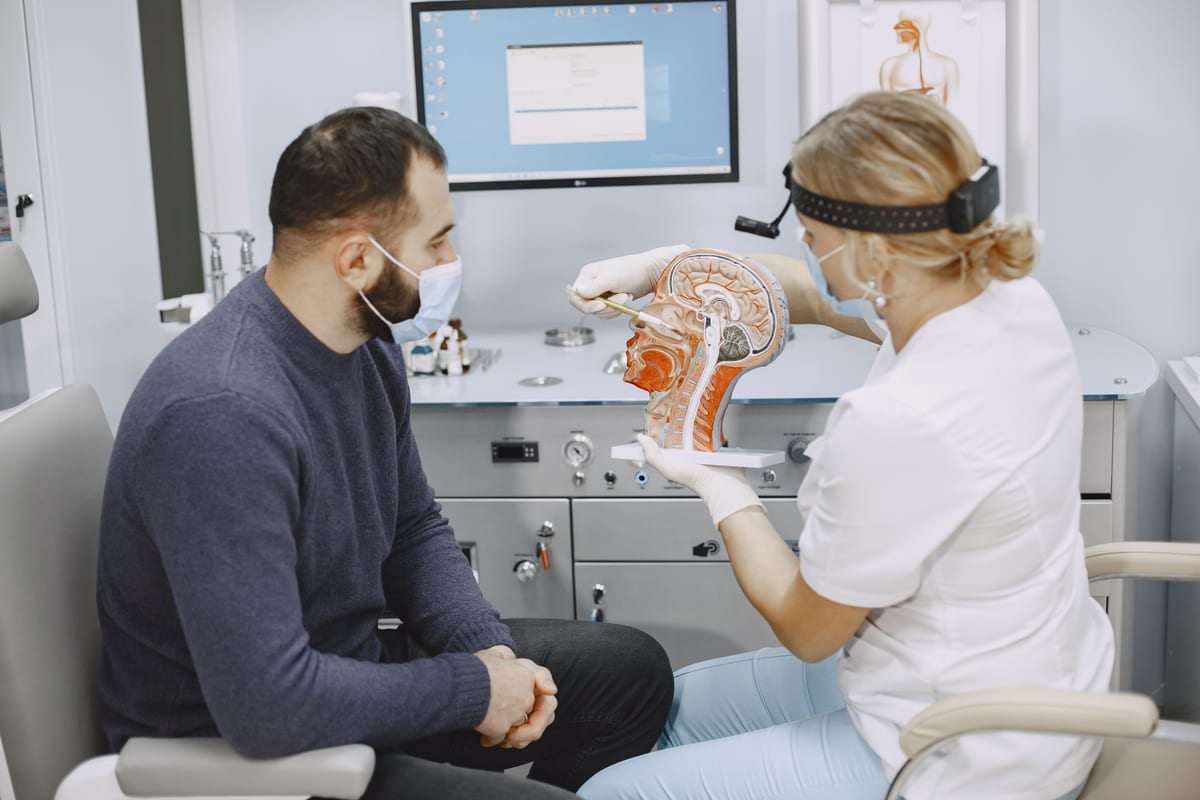
At Dental Care of Spokane, Dr. Behrmann takes a thorough, whole-mouth approach to evaluating jaw discomfort. The evaluation begins with a detailed conversation about your symptoms. Timing, triggers, and the nature of your pain all provide important clues.
A clinical exam checks jaw movement, joint sounds, and bite alignment. Dr. Behrmann also evaluates your teeth for signs of grinding or uneven wear. This evidence often reveals patterns that confirm a TMJ-related cause.
Treatment options vary based on the severity and cause of your condition. Mild cases often respond well to lifestyle adjustments and stress management. More significant cases may benefit from a custom oral appliance, bite adjustment, or restorative dental work.
Some patients with worn or damaged teeth from grinding also explore options like Veneers Spokane to restore their smile after TMD treatment is complete. Protecting and restoring your smile go hand in hand. Dr. Behrmann coordinates care to address both function and appearance.
Taking the First Step Toward Relief in Spokane
Living with daily headaches, jaw pain, or neck stiffness is exhausting. Many Spokane residents push through it, assuming nothing can be done. The reality is that jaw-related pain often responds well to the right dental care.
Early evaluation makes a meaningful difference. The longer TMD goes untreated, the more the joint and surrounding muscles can deteriorate. Acting sooner protects your long-term oral health and comfort.
If your symptoms involve both jaw function and the appearance of your smile, our team offers comprehensive Cosmetic Dentistry Spokane services to help you feel confident again. Restoring your bite and your smile can work together beautifully. Dr. Behrmann and the team at Dental Care of Spokane are here to guide every step of that journey.
You don’t have to keep guessing about what’s causing your pain. A focused dental evaluation can give you real answers. Book Now to schedule your appointment with our team.
Frequently Asked Questions
Can a dentist really treat headaches caused by jaw problems?
Yes. When headaches stem from jaw muscle tension or TMJ dysfunction, a dentist is actually the right provider to see. Dr. Behrmann can evaluate your bite, jaw movement, and signs of grinding to determine whether your jaw is the source of your pain. Many patients experience significant headache relief through targeted dental treatment.
How do I know if my headaches are from TMJ or something else?
TMJ-related headaches often appear alongside other jaw symptoms — like clicking, jaw soreness, or ear discomfort. They frequently occur in the morning after nighttime clenching. If your headaches haven’t responded to standard treatments and you also have jaw or facial tension, a dental evaluation is a smart next step.
Is teeth grinding always connected to TMJ disorder?
Bruxism and TMD are closely related but not always the same condition. Grinding can cause or worsen TMJ dysfunction over time. It can also damage teeth independently. Either way, addressing bruxism early — often with a night guard — helps protect both your jaw joint and your teeth.
What does a TMJ evaluation at Dental Care of Spokane involve?
Dr. Behrmann begins with a thorough review of your symptoms and health history. He then examines your jaw movement, listens for joint sounds, and assesses your bite alignment. The exam is gentle and non-invasive. Based on findings, he’ll recommend a personalized treatment approach that fits your specific situation.
Can TMJ symptoms go away on their own?
Mild TMJ symptoms sometimes improve with rest, stress reduction, and soft-food diets. However, many cases do not resolve without treatment and can worsen over time. If your symptoms have lasted more than a few weeks or are interfering with daily life, it’s important to have them professionally evaluated sooner rather than later.
Welcome to Our Practice
Ready to join the family at Dental Care of Spokane? Our team is driven by a passion for helping those in our community maintain, enhance, and restore their ideal smiles. We can't wait to meet you!
Schedule Your
Visit Now!
Map